
Repairing a concrete bridge must account for the damage and the function of the element, access, traffic and water. An inspection records condition and change; a specialist decides whether further investigation or structural analysis is needed. The contractor can plan the work responsibly only after access, traffic control, staging and repair method have been coordinated. [1, 2]
Locate and understand the damage
Map damage by element: deck, edge beam, pier, abutment, bearing or soffit. Record cracks, spalling, rust, leakage, earlier repairs and changes since previous inspections. Close-up inspection and special access may be needed to view defects adequately; a survey from the deck does not rule out damage below. [1]
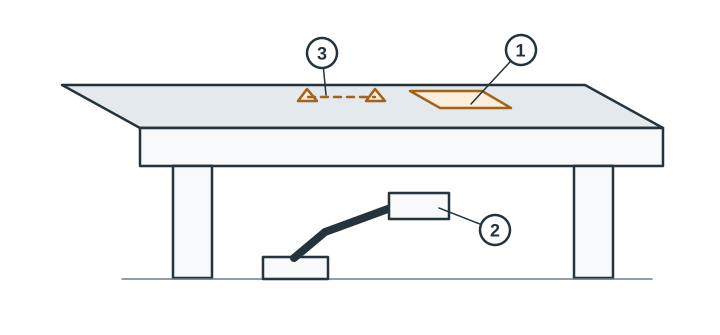 1. Deck work zone. 2. Example of independent access equipment for the soffit. 3. Deck traffic controls. The setup is project-specific.
Access and work organization
Work may be above traffic, water, rail or public space. Access options include an aerial lift, under-bridge vehicle, scaffold, suspended platform or boat. Selection depends on location, duration, clearance, load capacity, reach and traffic requirements. Lane closures or other restrictions must be coordinated with the owner and relevant authorities. Work over water may need rescue and environmental measures.
Plan repair by element and stage. Assess whether traffic or use can continue, whether temporary support is needed, and how concrete removal affects reinforcement, loads or stability. These decisions belong to the design and responsible structural engineer; they cannot be inferred from a generic detail. [2]
How to follow the work and result
Agree reference photos, repair limits, hold points, material records, test methods and a process for deviations in advance. Access and visibility may be restricted during the work, so schedule checks before work is covered and after removal. Handover should update inspection and maintenance records so later inspectors can compare changes. [1]
Ask who conducts the owner’s inspection, how access below the bridge will be maintained, which traffic arrangements are required, which elements are released in stages and how concealed work is documented.
See also identify concrete damage, concrete condition assessment and handover and maintenance.
Sources
- FHWA, National Bridge Inspection Standards: Q&A, Q313-6 and Q313-7, updated 2023: documenting condition and change; using special access where needed to identify defect severity and extent. FHWA.
- Cerema, Instruction technique pour la surveillance et l'entretien des ouvrages d'art, Fascicule 5, 2023, “Conduite d’une intervention sur un ouvrage existant”: diagnosis and repair studies require specialist multidisciplinary preparation and careful sequencing. Cerema.
- Rijkswaterstaat, Bridges, inspection and maintenance plans and possible temporary measures. Source.